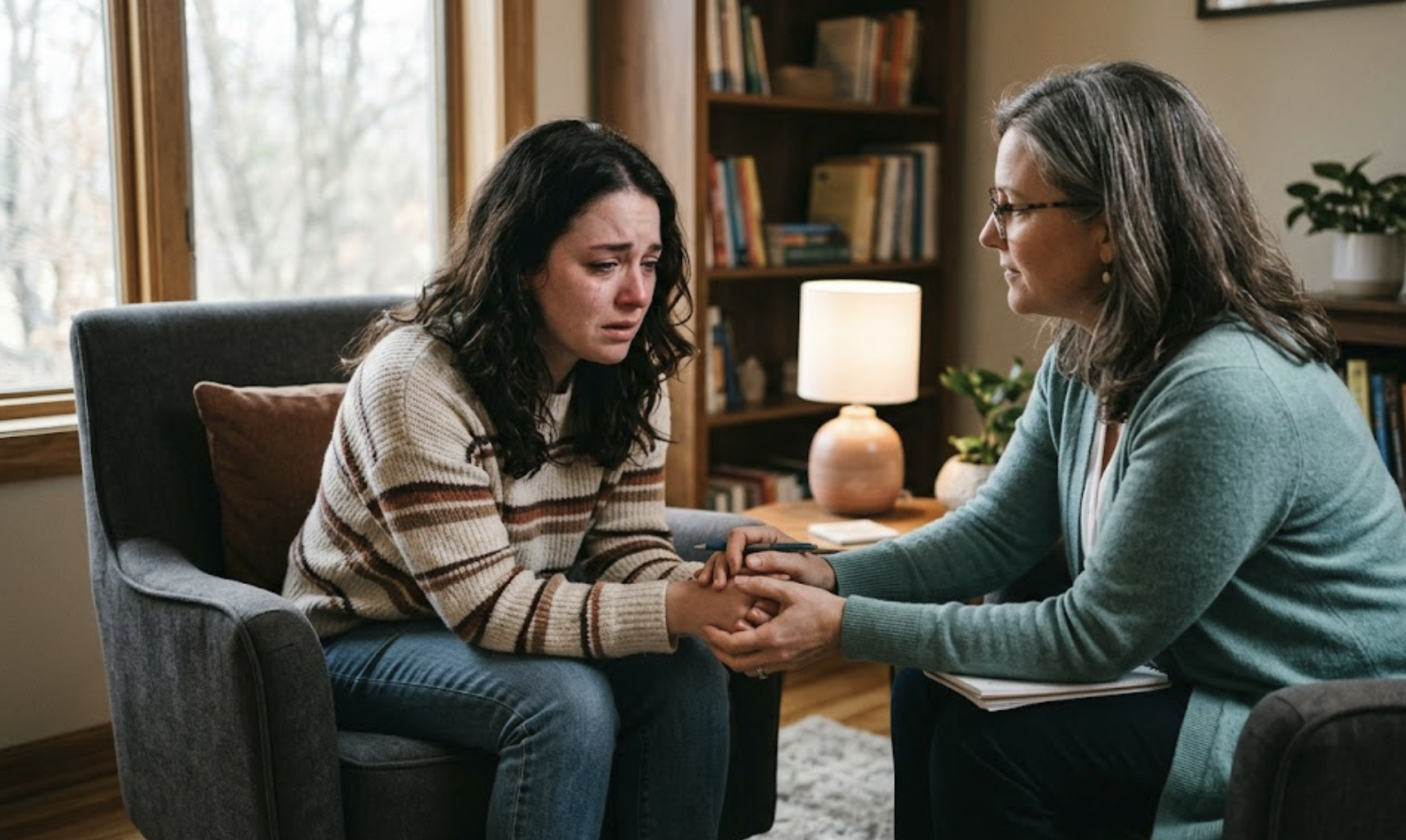
Experiencing a sudden wave of intense fear is terrifying, but panic disorder therapy can help you regain your sense of control.
When your heart starts racing out of nowhere, it often feels like a serious medical emergency. These sudden episodes can make you dread leaving your house or participating in daily activities.
You don’t have to live in constant fear of the next episode. Through our mental health care, we offer compassionate support for people dealing with intense anxiety. We’ll work alongside you to build effective coping strategies so you can live a fulfilling, peaceful life.
A panic attack is a sudden, intense surge of fear that peaks within minutes. It happens when your body's fight or flight response triggers a false alarm. There’s usually no clear or immediate danger present when the attack begins.
Many people describe the experience as feeling completely out of control. Your brain sends signals that you’re in extreme danger, causing a cascade of physical reactions. This intense reaction often leads people to visit the emergency room because the physical sensations closely mimic a heart attack.
While the episode itself is relatively short, the exhaustion that follows can last for hours. Feeling drained and on edge after an attack is completely normal.
The physical symptoms of an attack are often the most frightening part.
You might experience a pounding heart, chest pain, and feeling as if you can’t catch your breath. Other common physical signs include sweating, trembling, dizziness, and numbness in your hands or feet.
The emotional symptoms are equally intense and distressing.
A profound sense of impending doom or a fear of dying is very common during an episode. You might also experience a feeling of detachment from reality, making the environment around you seem distorted or unreal.
Recognizing these symptoms is crucial in managing them. When you understand that these terrifying sensations are a temporary physical response, they slowly become less intimidating.
Panic disorder develops when the fear of having another attack starts to dictate your life. You might begin avoiding certain places or situations where an attack previously happened. This avoidance provides temporary relief, but it actually strengthens the underlying anxiety over time.
Breaking this cycle requires changing how you respond to the fear itself. Instead of trying to fight the feeling, learning to tolerate the uncomfortable physical sensations is highly effective. As you slowly realize that the symptoms are not dangerous, your brain stops sounding the alarm as loudly.
Consistent practice is necessary to change these deep-rooted thought patterns. A trained professional can guide you through this process safely, ensuring you don’t push yourself too hard too quickly.
Therapy provides a structured and supportive environment to address your anxiety.
Cognitive Behavioral Therapy (CBT) is one of the most effective approaches for this condition. CBT helps you identify the negative thoughts that fuel your anxiety and teaches you how to challenge them.
During your sessions, a therapist will help you understand your specific triggers. You’ll learn that your physical symptoms, while uncomfortable, won’t harm you. This logical reframing takes the power away from the fear.
Exposure therapy is another technique often used within CBT. A therapist will help you gradually and safely recreate the physical sensations of an attack, like a rapid heart rate. Over time, this controlled practice teaches your brain that these sensations are safe, reducing the likelihood of future episodes.
Contact us today to learn more.
When you feel an episode starting, having a plan in place can make a huge difference.
Deep breathing is a simple but powerful tool to calm your nervous system. Try breathing in slowly through your nose for four seconds, holding for a second, and exhaling through your mouth for six seconds.
Grounding techniques can also help pull your mind away from the fear. The 5-4-3-2-1 method is very popular. You simply name five things you can see, four things you can touch, three things you can hear, two things you can smell, and one thing you can taste.
Remind yourself out loud that the feeling will pass. Saying phrases like "I am safe" or "This is just anxiety" helps ground you in reality.
These small actions interrupt the escalating fear and give you a sense of power over the situation.
What triggers a severe anxiety episode out of the blue?
Sudden episodes often occur without any obvious trigger. They happen when the brain's fear center becomes overly sensitive, interpreting normal bodily sensations as serious threats. Stress, lack of sleep, or excess caffeine can also make your nervous system more reactive.
Is it possible to cure panic disorder?
While there’s no instant cure, it’s a highly treatable condition. Many people experience a complete reduction in their symptoms through consistent therapy and stress management.
Learning effective coping tools enables you to handle future stress without triggering severe anxiety.
Can regular exercise help reduce the frequency of attacks?
Yes. Engaging in moderate aerobic exercise helps lower overall stress hormones in your body.
Physical activity also mimics some of the physical sensations of panic, like a faster heart rate, which can help desensitize your brain to those specific feelings in a positive context.
How does caffeine affect an overactive nervous system?
Caffeine is a stimulant that increases your heart rate and can cause jitteriness. For someone with an already sensitive nervous system, these physical changes can trigger a false alarm and lead to an episode. Reducing or eliminating caffeine is often recommended for better anxiety management.
What should I tell my family about my anxiety?
Educating your loved ones is helpful. Explain that your symptoms are real physical reactions to a false alarm in your brain. You can ask them to simply sit with you, speak in a calm voice, and remind you to breathe when an episode happens.
Dealing with intense fear can make you feel isolated, but there’s a safe path forward. Cook Behavioral Health provides the professional care you need to understand your anxiety and reclaim your life.
We’re here to help you process your fear and find your calm.
Contact us today to schedule an appointment.
Disclaimer: We hope you find the information in this blog helpful, but please remember that it's not meant to replace personalized advice from a mental health professional. If you have concerns about your mental health, please reach out to our team at Cook Behavioral Health. We’re here to support you.

