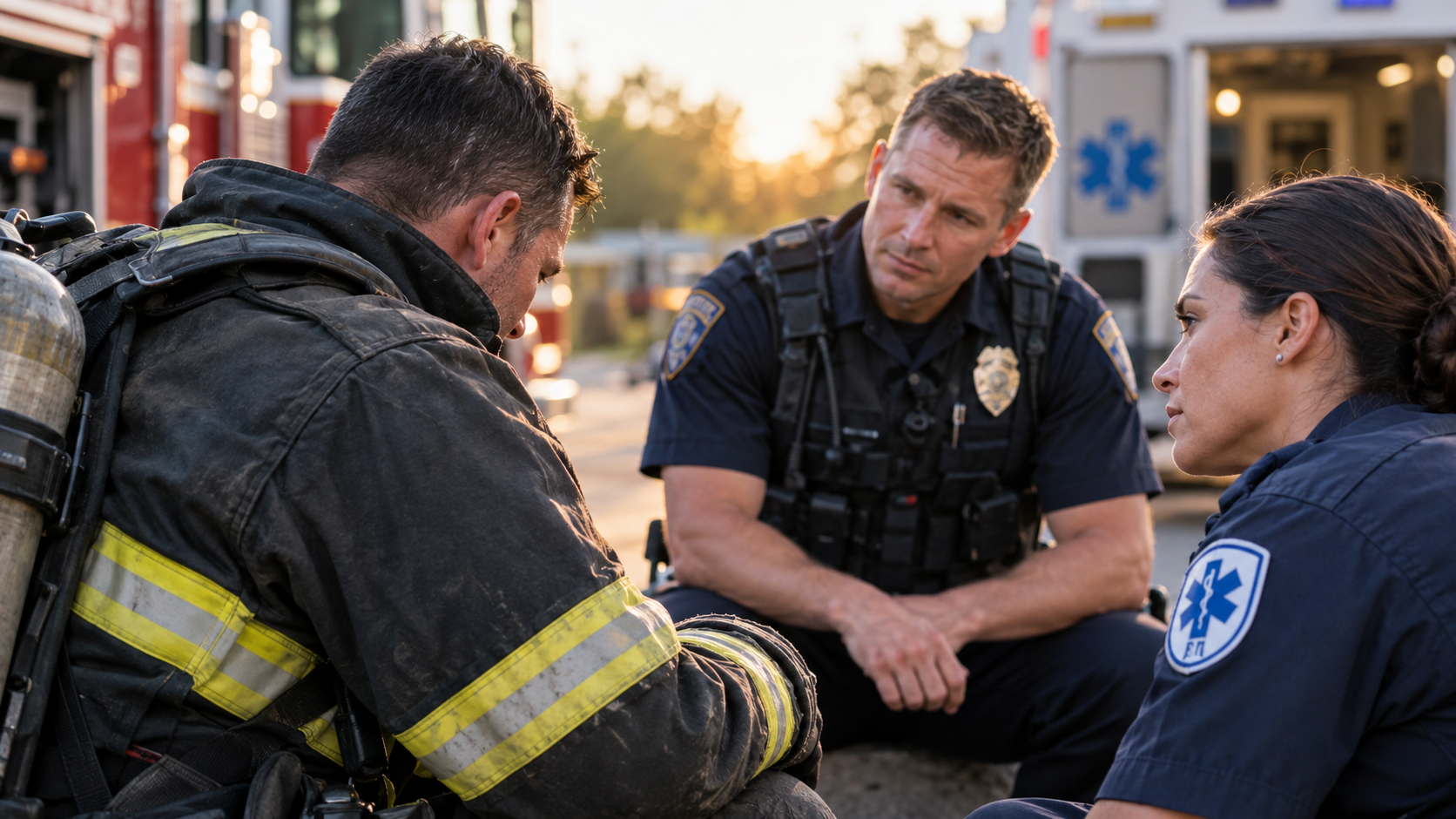
TL;DR: First responder work asks you to stay calm, push through, and keep going, but the stress can build over time. Police officers, firefighters, EMTs, paramedics, dispatchers, and other emergency workers may deal with hypervigilance, sleep disruption, trauma exposure, irritability, anxiety, depression, relationship strain, or burnout. Therapy for first responders can help you process what you have seen, manage stress, build coping skills, and protect your mental health without losing the strength that helps you do your job.
At Cook Behavioral Health in Fort Wayne, we offer support for first responders navigating trauma, stress, anxiety, and the pressure of high-stakes work.
You're used to being the calm in the chaos. When other people freeze, you move. When the scene is loud or unpredictable, you focus on what comes next.
That steadiness is a skill. It protects you, your team, and the people you serve. But what happens when your body keeps bracing for the next call, even when you're off duty?
You already know the job is stressful. The harder question is what to do when pushing through becomes your default, rest doesn't feel restful, and asking for help feels complicated.
At Cook Behavioral Health, we work with first responders carrying this kind of pressure. This article explains what therapy for first responders can look like when it's built for people doing high-stakes work.
Police academy, fire training, and EMT certification prepare you for the technical demands of the job. You learn how to respond, assess, protect, and act under pressure. What those programs don't always prepare you for is cumulative exposure, which is the way stress and trauma can build up over months and years.
It may not be one single call that changes things. Sometimes, it's the steady buildup of difficult scenes, long shifts, interrupted sleep, high-stakes decisions, and moments you had to push through because the next call was already coming.
Research compiled by the National Library of Medicine shows that first responders face a substantially higher prevalence of post-traumatic stress disorder (PTSD) compared to the general population. Occupational stress in this line of work is also linked to anxiety, depression, and other mental health concerns, especially when stress, trauma, and pressure build over time.
You may notice signs that the stress is starting to take a toll:
Emotional signs: Persistent irritability, anger that feels bigger than the situation, numbness, disconnection, guilt about calls you couldn't control, or losing interest in things you used to enjoy.
Physical signs: Trouble sleeping, nightmares, flashbacks, panic symptoms, chronic fatigue, or unexplained aches.
Behavioral signs: Drinking or using substances more often, pulling away from family and friends, struggling to relax off duty, or avoiding certain calls or situations.
Relationship signs: More conflict with your partner, feeling distant from your kids, or withdrawing from coworkers.
If any of this sounds familiar, your mind and body may be carrying more than they can keep absorbing on their own. Stress counseling strategies can help you build coping skills, process what you have been through, and respond to pressure before these patterns become harder to manage.
If you've been putting off talking to someone, you're not the only one. First responders face real barriers to support, and those barriers deserve to be taken seriously.
Stigma in the culture: In many departments and stations, there can be an unspoken message that needing mental health support means you can't handle the job. That message can be hard to shake, especially when everyone around you seems like they're fine.
Worry about your career: You may wonder whether seeking help could affect your role, reputation, promotion opportunities, or your ability to remain on duty. Even when confidentiality protections are in place, those concerns can still feel very real.
Feeling misunderstood by outsiders: It can be hard to open up to someone who doesn't understand first responder work. You shouldn't have to explain why one call stayed with you, why certain scenes replay in your head, or why dark humor can become a way to cope.
The habit of pushing through: Pushing through may have helped you function in emergencies and get through hard shifts. But over time, that same habit can make it harder to notice when stress is starting to build.
These barriers make sense in the world you work in. That's why police officer therapy, firefighter mental health care, and other forms of therapy for first responders need to account for the culture, the pressure, and the reality of the job, not just the symptoms.
Therapy for first responders gives you a place to process what you carry, build practical coping tools, and stay steady in a job that asks a lot from you.
Trauma-informed mental health care starts with the understanding that difficult experiences can shape how you think, feel, react, and move through the world.
For first responders, this often means looking at cumulative exposure. You may not have one single traumatic event that explains everything. Instead, it may be the buildup of calls, scenes, losses, close calls, and stress over time.
Trauma-informed counseling helps you better understand why your nervous system responds the way it does and gives you strategies to feel more regulated, both on and off duty.
Therapy for first responders often includes practical approaches that align with the realities of high-stress work.
Cognitive Behavioral Therapy (CBT): CBT can help you identify thought patterns that may be feeding anxiety, anger, guilt, or depression. It also helps you build healthier ways to respond when stress shows up.
Eye Movement Desensitization and Reprocessing (EMDR): EMDR is a structured approach that can help your brain process traumatic memories so they feel less intrusive and less disruptive.
Dialectical Behavior Therapy (DBT): If you struggle to manage intense emotions, tolerate distress, or handle conflict, DBT can teach you skills for staying grounded in difficult moments.
Motivational Interviewing: This approach can help if part of you wants support, but another part feels unsure, guarded, or not ready. It helps you explore change at your own pace, without pressure.
First responder stress often shows up at home, even when you're trying hard not to bring the job with you. You may feel more irritable, distant, shut down, or unable to be fully present with the people you love.
Support for life challenges and personal growth can include individual therapy, relationship support, or family therapy. These services can help you communicate more clearly, rebuild connection, and help your loved ones better understand what you're carrying.
First responder work asks you to stay steady in moments most people never have to face. But even strong coping skills can get stretched thin when stress, trauma, and long shifts keep building over time.
If you're noticing changes in your mood, sleep, relationships, or ability to relax off duty, support can help you make sense of what's happening before it becomes harder to manage.
At Cook Behavioral Health, we provide a confidential space for first responders to process what they carry, build practical coping tools, and protect their mental health while continuing to do important work.
When you're ready, reach out to Cook Behavioral Health to start the conversation.
If you see a private provider outside your employer, therapy is confidential. Your therapist can't share information without your consent except in specific safety situations. Choosing an independent practice like Cook Behavioral Health can help keep your care separate from your workplace.
Therapy for first responders accounts for the realities of the job, including cumulative exposure, shift work, hypervigilance, difficult calls, sleep disruption, and pressure to keep functioning.
That's common. Many first responders are affected by the buildup of hard calls, long shifts, losses, and stress over time. Therapy can help you process cumulative stress, even without one defining event.
Yes. Anger and irritability are common when stress builds over time. CBT and DBT can help you understand those reactions, build emotional regulation skills, and respond in healthier ways.
Getting support can be one way to pay attention to what this work asks of you, especially when the stress keeps building after the shift ends.
Therapy for first responders can help you protect your mental health, strengthen your coping skills, and keep doing important work without losing yourself in the process.
If you're ready to talk, the Cook Behavioral Health team offers mental health services in Fort Wayne for people navigating stress, trauma, anxiety, and the pressure of high-stakes careers. We support police officers, firefighters, EMTs, paramedics, dispatchers, and others in emergency services.
Schedule a therapy appointment when you're ready. No pressure. We're here when you need us.
Disclaimer
We hope you find the information in this blog helpful, but please remember that it's not meant to replace personalized advice from a mental health professional. If you have concerns about your mental health, please reach out to our team at Cook Behavioral Health. We're here to support you.

